
How a Retaining Wall Creates a Backyard Where the Slope Used to Be in Greenville, SC
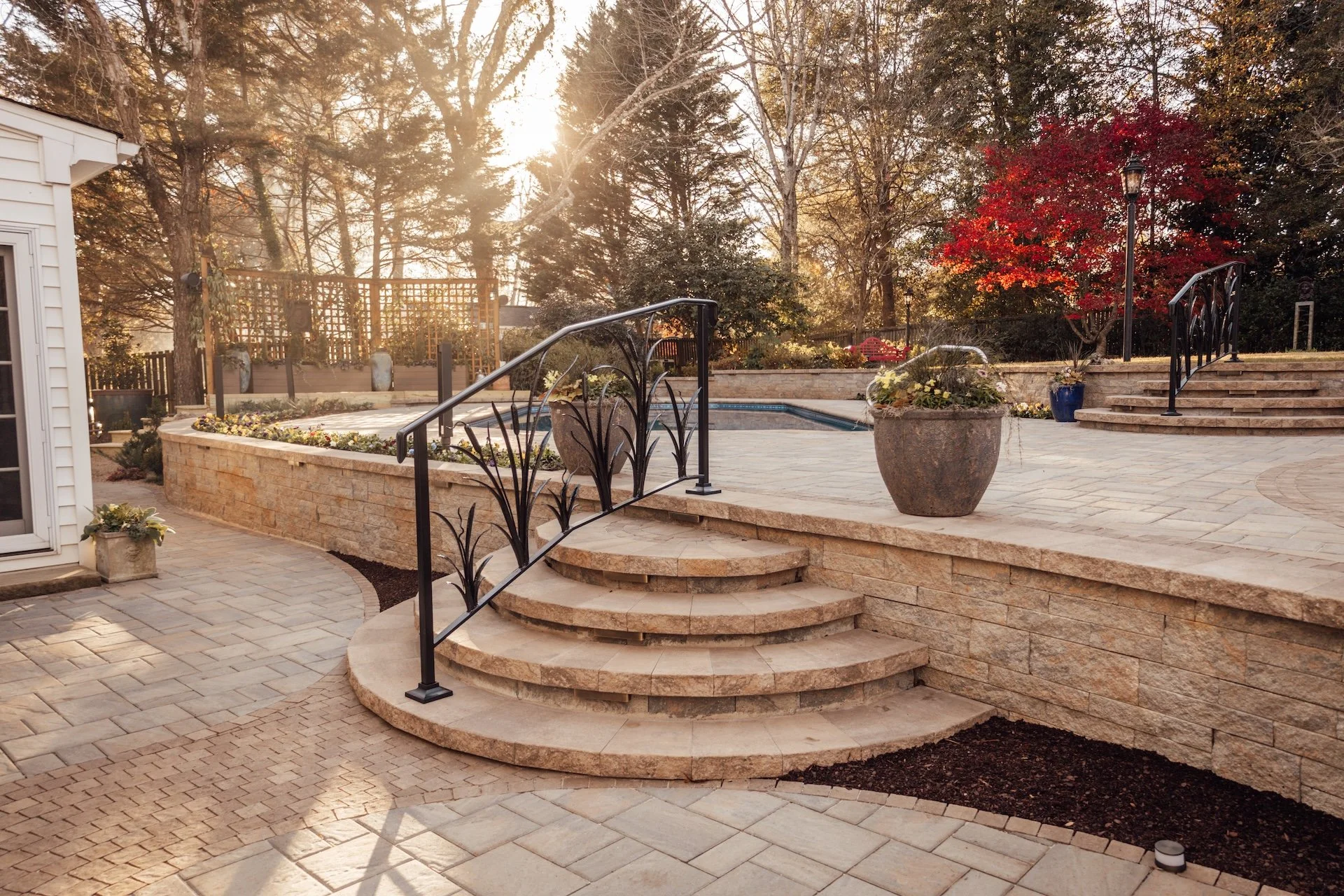
The Upstate has rolling terrain. Beautiful from the car. Challenging from the backyard. The grade that makes the drive through Travelers Rest scenic is the same grade that makes a patio impossible without intervention and a fire pit a grading nightmare. The slope is the property. And until someone addresses it, the slope is also the limitation.
A retaining wall is how the limitation becomes the opportunity. It catches the grade at a defined elevation, creates a level surface where the landscape can actually be built, and turns the most difficult part of the property into the most functional part.
Related: Retaining Wall in Mauldin, SC: Solutions for Sloped Backyards and Erosion
What the Upstate Clay Asks of the Build
The Piedmont red clay that dominates the Greenville area is strong under compression but moves with moisture. It swells when wet. It shrinks when dry. It holds water against every surface it touches. And it creates lateral pressure against a retaining wall that increases every time it rains.
A retaining wall built on red clay requires:
A base excavated below grade with compacted aggregate that distributes the load and provides a drainage path beneath the first course
A drainage system behind the wall, including aggregate backfill and a perforated pipe at the base, that intercepts water before it saturates the clay and pushes against the wall face
Backfill compacted in lifts to prevent settling that would create voids and compromise the drainage
Geogrid reinforcement on walls taller than three to four feet that ties the wall into the retained soil and reduces the load on the wall face alone
A cap course that locks the top, finishes the visual, and can provide seating where the height and placement allow
These details are invisible once the wall is complete. They are also the only reason the wall stays where it was built.
Related: How a Retaining Wall Enhances Outdoor Living Spaces in Easley, SC
How the Wall Opens Up the Design
The structural purpose is holding soil. The design purpose is creating space. A single wall across a slope produces a patio pad, a fire feature area, or a planting terrace. A series of walls produces a layered backyard with distinct zones at different elevations connected by steps and walkways.
The material sets the character. Natural stone reads as organic and traditional. Manufactured block offers consistency and a range of modern profiles. The choice depends on the architecture of the home and the style of the surrounding landscape.
The Slope That Becomes the Reason to Go Outside
The properties in the Greenville area that make the most of their outdoor space are often the ones with the most challenging terrain. The grade forced the design to be intentional. The retaining wall created the levels. And the finished landscape has a depth and a structure that a flat yard would never have required or achieved. If the slope on your property in Greenville, Greer, Simpsonville, or the surrounding communities has been keeping you from using the backyard the way you want to, a conversation about what a retaining wall could open up is a good place to begin.
Related: Retaining Walls for Lasting Strength and Style in Greenville and Travelers Rest, SC